Real Estate App Development Guide: Features, Cost & Tech Stack
06 MARCH
Mobile apps are at the centre of this change in the real estate business, which is quickly becoming more digital-first. Modern buyers expect mobile apps that work smoothly, whether they want to browse property ads, schedule visits, or talk to agents. To stay competitive, companies across the US are investing heavily in developing PropTech apps.
Statista says that the US real estate market will be worth more than $136 trillion by 2026. Every year, more and more people use their phones to look for homes. In fact, more than 70% of people who want to buy a home in the US start their search online. This makes mobile apps an important touchpoint.
These trends make it clear that buying a real estate mobile solution is no longer a choice; it’s a smart move. But a lot of companies still ask important things like
- What are the features that you must have?
- How much does it cost to make a real estate app?
- Which is the best tech stack for real estate app projects?
This detailed blog covers all of these questions and shows you how to build a real estate platform that can grow and make money step by step.
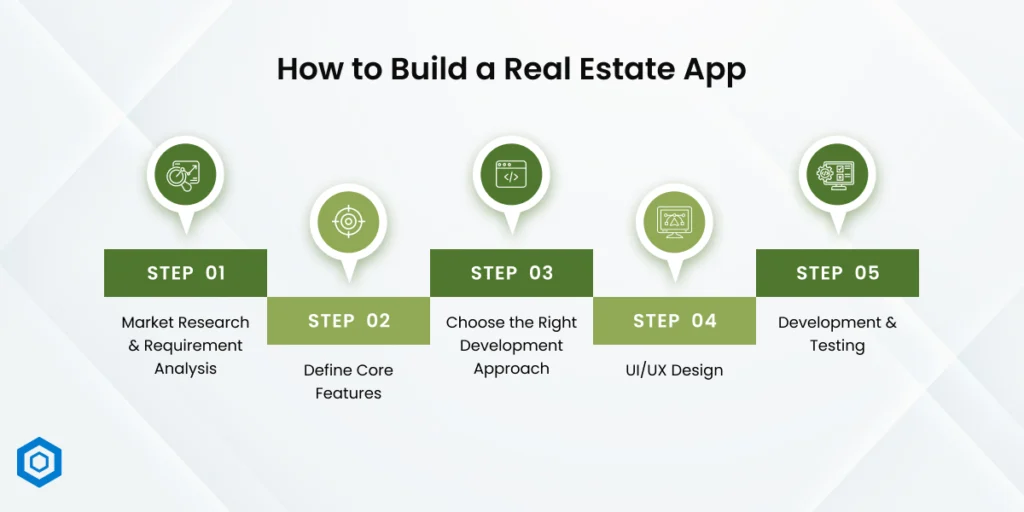
How to Build a Real Estate App (Step-by-Step Overview)
If you want to learn how to make a real estate app, you need to stick to an organised development timeline.
Step 1: Market Research & Requirement Analysis
Before you can make a real estate app, you need to know who you’re trying to reach and how the market works. Look at your competitors, identify what users are struggling with, and define your app’s unique selling point. If you plan, you won’t have to make costly changes later. This will also help you keep the cost of making the real estate app low.
Step 2: Define Core Features
You can be sure your real estate app will solve real user problems from the start by making a list of the features it should include. Make sure you have the most important features in place before adding more advanced ones. Some of these include property search, filters, contacting a dealer, and managing your profile. A well-organised feature plan reduces the time it takes to develop a product and get it to market.
Step 3: Choose the Right Development Approach
The cost, freedom, and speed can change if you use native, cross-platform, or mixed code. In the US, businesses that want to reach people who use both iOS and Android can set up cross-platform options more quickly. The option you choose will directly impact the cost and amount of work needed to maintain a real estate app over time.
Step 4: UI/UX Design
How people feel about a real estate site depends largely on how quicklyit grows. Users can quickly browse listings because the sites are well-organised, easy to use, and feature good photos of the homes. When you carefully plan and invest time and money in design, you get more people involved, and your real estate app development company’s plan performs better overall.
Step 5: Development & Testing
At this point, developers build the front end, back end, APIs, and third-party integrations your business requires. An extensive testing process was conducted to ensure the app works well across all devices, screen sizes, and network conditions. As you work on your product, ensure the development process is well-organised to reduce bugs and ensure smooth product releases.
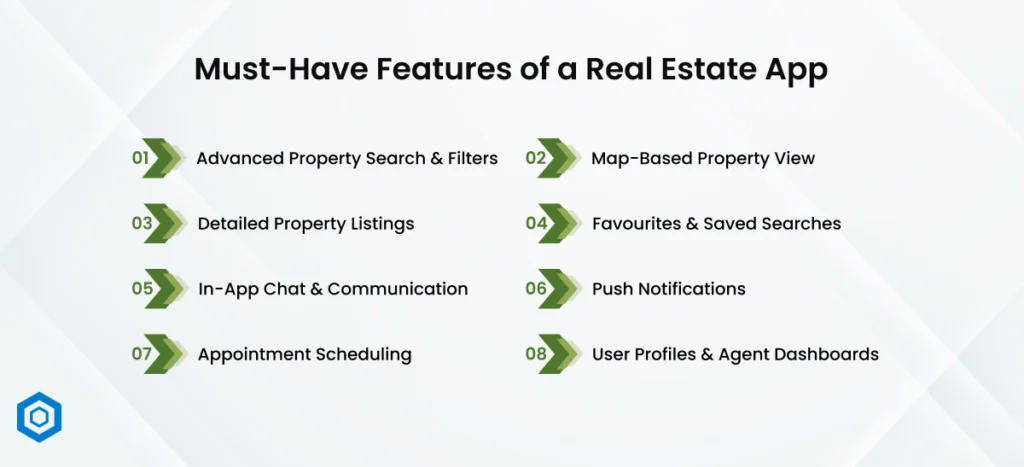
Must-Have Features of a Real Estate App
Selecting the right features is a key part of figuring out how to make a real estate app. Having the right mix of complicated and simple features can directly increase sales, consumer attention, and retention. Every good real estate app should have these key benefits.
1. Advanced Property Search & Filters
With an advanced search system, users can quickly find homes based on location, price range, home type, features, and more. Advanced screening makes people happy by eliminating results that aren’t useful and helping them make decisions more quickly. One of the most important things a real estate app should have for people who are looking to buy right now.
2. Map-Based Property View
A live map display lets users see homes based on their location. It’s easier to view when you have information about the area, nearby schools, and how to get there. Finding things on a map is now a feature that all professional PropTech apps should offer.
3. Detailed Property Listings
Each ad should include high-resolution photos, videos, property details, prices, and key specs. People can look at homes on rich ad pages without calling an agent right away. If you organise your listings well, they get a lot more attention and help your SEO.
4. Favourites & Saved Searches
People like being able to bookmark items and make their own search filters that they can use again and again. It’s this feature that keeps people interested in the app while they’re deciding whether to buy it. Also, it helps real estate companies learn about how people behave.
5. In-App Chat & Communication
As soon as a buyer, owner, or agent opens the app, they can send a message to each other. Problems are less likely to happen when you chat in real time, and the sales process goes faster. Many of the best platforms believe this is a useful tool for real estate apps looking to generate more leads.
6. Push Notifications
Push texts let users know about new games, price drops, upcoming trips, and market changes. When you notify people at the right time, they are much more likely to connect and repeat. Smart use of these tools can help any business that makes real estate apps grow.
7. Appointment Scheduling
With built-in planning, users can plan trips to homes right from the app. This keeps people from having to talk back and forth, which helps things go more quickly for the workers. When the US real estate market is moving quickly, it helps to have some time to spare.
8. User Profiles & Agent Dashboards
When you create a user account, you can access the options, preferences, and contact information that you have saved. Agent screens let people see how well they’re doing, keep track of ads, and answer questions. These two-interface frameworks are often used to make scalable PropTech apps.
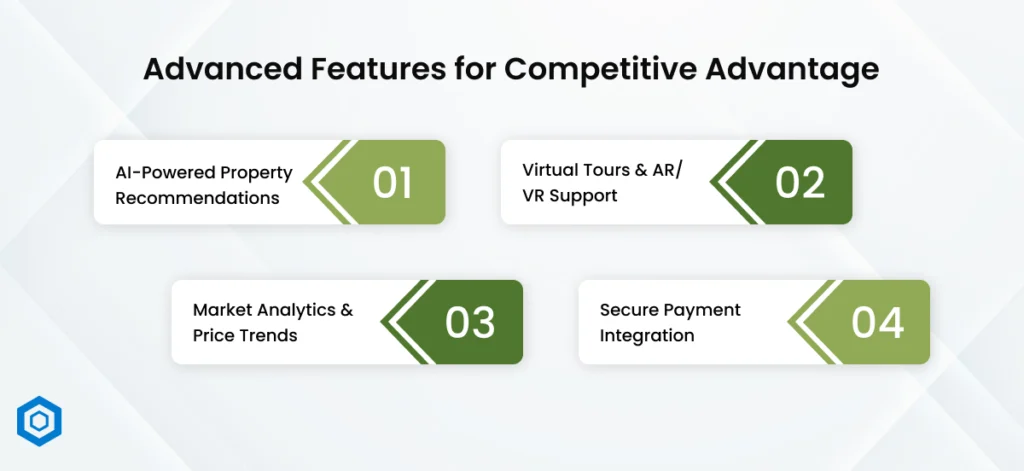
Advanced Features for Competitive Advantage
If a company wants to stand out in the US real estate market, it might want to add more advanced features to its apps beyond the basics.
1. AI-Powered Property Recommendations
AI programs automatically give important traits to people based on how they act. People are more interested in and likely to buy when they receive personalised tips. This feature is quickly becoming one of the most important things that makes real estate apps unique.
2. Virtual Tours & AR/VR Support
Buyers can look at homes from afar with virtual walkthroughs. This saves time for both the buyers and the real estate agents. People and businesses from other countries will find AR and VR features very useful. Top PropTech sites are quickly becoming fans of this new idea.
3. Market Analytics & Price Trends
It’s a big plus to share business tips, market estimates, and price trends in the area with serious buyers. People see your platform as an expert in real estate because it generates ideas based on data. As a bonus, this feature helps keep people longer.
4. Secure Payment Integration
On both rental sites and ticket markets, users can pay rent, deposits, and booking fees using built-in payment methods. Safe deals build trust and make things run more easily. Usually, these numbers show how much it takes to build a real estate app: 5. e. Complete trading tools should have this feature.
Real Estate App Development Cost in the US
How much does it cost to develop a real estate app? Many businesses ask this question. The answer is hard to give because it depends on many scientific and business factors.
The cost of developing a real estate app in the US varies widely depending on the chosen technology, the number of features, and the app’s complexity. Businesses don’t usually think about how much they need to spend because modern PropTech platforms offer advanced tools, scalable technology, and a great user experience design.
The amounts below show how much it takes to make a real estate app in general:
- An easy real estate app costs between $25,000 and $50,000.
- $50,000 to $120,000 for a middle-level game with lots of features
- Base for businesses with at least $120,000 in sales
It’s common for a simple app to have user accounts, search tools, and lists of features that it needs. Mid-level apps have better screens, more features, and support for maps and push notifications. AI ideas, AR/VR trips, MLS links, advanced analytics, and large-scale cloud design are all common features in business platforms.
When companies learn how much it costs to build a real estate app, they should consider ongoing costs such as maintenance, cloud storage, third-party API fees, and future feature development. Working with a real estate app development company with extensive experience will help you get a good idea of the cost and avoid going over budget.
Whatever you decide to spend will depend on what you want your product to do, how much growth you need, and how creative you want your PropTech app development plan to be.
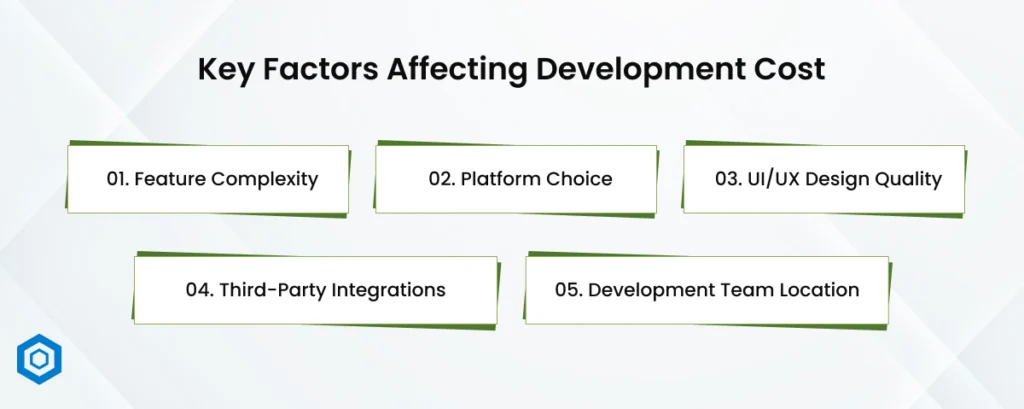
Key Factors Affecting Development Cost
1. Feature Complexity
The time it takes to make something depends on how many and how complex the features are. The price of making a real estate app goes up a lot when you add advanced features like AI ideas, virtual reality tours, and data panels. You can get the most for your money by putting must-have features at the top of the list.
2. Platform Choice
It costs more to develop separate native iOS and Android apps than to use a cross-platform approach. Native apps, on the other hand, may sometimes work better. How much it costs to make a real estate app depends on the technology you use.
3. UI/UX Design Quality
It takes more time and expertise to create a custom, high-end interface for real estate platforms. Many users choose property apps based on their appearance and ease of navigation. Working with a professional UI/UX design company helps ensure the app delivers a smooth, intuitive, and visually engaging experience. Although better UX may increase the initial development cost, it often pays off in the long run through higher user engagement and retention. This is one reason PropTech apps can be more expensive to design and build.
4. Third-Party Integrations
Integrating MLS records, payment tools, maps, and CRM systems slows down the building process. Updating and testing become more important with each new external API. Although these links are important, they need careful consideration.
5. Development Team Location
Hiring a team in the US usually costs more than working with a real estate app creation business in another country. Many businesses use hybrid models to balance quality and budget. The organisation of the team significantly affects the overall cost of the job.
Why Choose Codeflash Infotech for Real Estate App Development
Choosing the right development partner is crucial to the success of your real estate application. Beyond technology and features, your technology partner’s expertise directly impacts performance, scalability, time to market, and long-term return on investment. Codeflash Infotech helps US businesses build reliable PropTech platforms that are designed to meet evolving industry demands while ensuring smooth functionality and business growth.
With deep PropTech expertise, an end-to-end development approach, scalable architecture, user-centric design, and flexible engagement models, Codeflash Infotech delivers future-ready real estate solutions. Their structured process ensures faster deployment, seamless user experience, and adaptability for future expansion, enabling businesses to launch innovative apps that drive engagement, conversions, and long-term success.
Conclusion
Mobile apps are no longer a nice-to-have in the real estate business; they are now vital to the business’s success. They will have a better chance of attracting buyers and renters in today’s competitive US market if they know how to build a real estate app with the right features, a scalable architecture, and a user-centred design.
Picking the right tech stack for a project and the features of a real estate app will all affect how well it works, how engaged users are, and the long-term return on investment (ROI). How hard and wide your real estate app is will determine how much it costs to make. On the other hand, well-thought-out PropTech solutions can generate many leads and make things run more smoothly.
You should work with a real estate app development company with extensive experience if you want to build a high-performing real estate tool. Codeflash Infotech has the technical know-how, repeatable development methods, and user-centred design to help businesses start and grow strong real estate apps in the US market.
Frequently Asked Questions
Building a real estate app can cost anywhere from $25,000 for a simple app to $300,000 or more for a complex business platform. Making a real estate app costs a lot, including features, the platform, links, and the developers’ location.
Key real estate apps must include advanced property search, map integration, detailed listings, saved favourites, push notifications, in-app chat, and appointment scheduling. Smarter apps might also include video tours and AI features.
A simple real estate app takes about three to four months to make, but a platform with lots of features could take six to nine months or even longer. How long it takes depends on how difficult the app is, how extensively it is customised, and how skilled the company that creates your real estate app is.
For real estate app projects, the best tech mix usually has AWS or Google Cloud for storage, React Native or Flutter for the front end, and Node.js or Python for the back end. The best stack depends on how much it needs to grow and how fast it needs to be.