Digital Transformation in PSU Banks: Bridging the Gap with Custom Software
13 MARCH
Banks should take a close look at their existing systems before making any changes. After that, they should switch to cloud platforms, build with APIs in mind, and use AI to automate tasks.
PSU banks that invest in custom banking software development and modernize their core systems are positioning themselves to compete directly with private banks and fast-growing fintech companies. The winning approach involves a phased strategy: auditing existing systems, migrating to cloud platforms, adopting API-first architecture, and deploying AI-powered automation at scale.
According to Statista, global spending on digital transformation technologies and services is expected to reach nearly $3.9 trillion by 2027. People and businesses in the US are still getting used to digital payments. These changes show how important it is for public buildings to be fixed up and for public and private banks to catch up on technology, which has been a long-standing gap.
So they can stay ahead of their private-sector competitors, public-sector banks need to plan for the future with smart technology, cloud-native tools, and new data. The people in charge of money, IT, and politics need to plan for the next stage of growth. They want to know how the use of custom software has changed PSU banks.
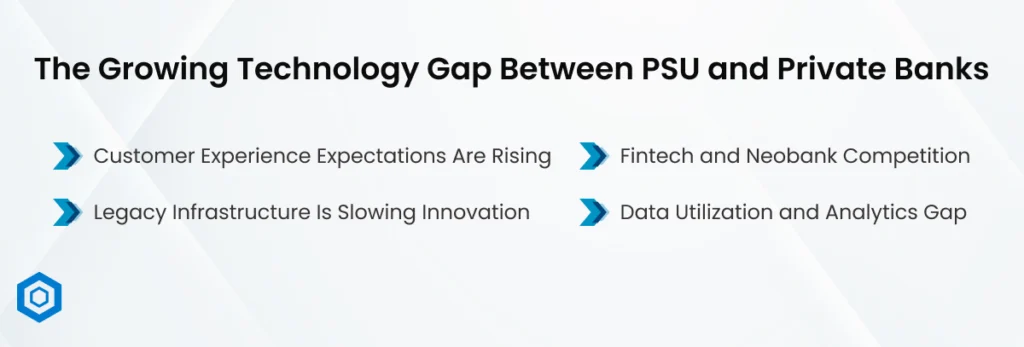
The Growing Technology Gap Between PSU and Private Banks
Customer trust in PSU banks remains strong — but when it comes to technology adoption, private banks have historically moved faster. This speed gap has created meaningful differences in customer experience quality, product agility, and innovation capacity. Addressing these differences is precisely what digital transformation in PSU banks is designed to solve.
1. Customer Experience Expectations Are Rising
Today’s banking customers expect instant account opening, real-time transaction visibility, and frictionless mobile experiences. While some PSU banks have made significant investments in user-centered platforms, many still operate on outdated interfaces and manual workflows.
Meeting these rising expectations is one of the strongest business cases for digital transformation in PSU banks — and one of the clearest areas where custom software delivers immediate, measurable impact.
2. Legacy Infrastructure Is Slowing Innovation
Many PSU banks still run monolithic core systems where adding new features requires lengthy development and testing cycles. Private banks, by contrast, operate modular, API-driven architectures that allow rapid iteration and faster product launches.
Modernizing this infrastructure is not just a technical upgrade — it is the foundational requirement for any PSU bank digital transformation initiative to succeed long-term.
3. Fintech and Neobank Competition
Digital-native fintech companies and neobanks continue to push boundaries on speed, convenience, and automation. Both public and private banks face this competitive pressure — but PSU banks often carry more structural constraints that slow their response time.
This is exactly why purpose-built custom software has become a critical enabler of digital transformation in PSU banks, giving institutions the flexibility to innovate without replacing entire systems overnight.
4. Data Utilization and Analytics Gap
Private banks routinely use advanced analytics to deepen customer understanding and manage risk in real time. Many PSU banks are still building this capability from the ground up.
Closing this data intelligence gap is now one of the primary goals driving PSU bank digital transformation programs — and AI-powered analytics tools are increasingly central to how public sector banks are getting there.
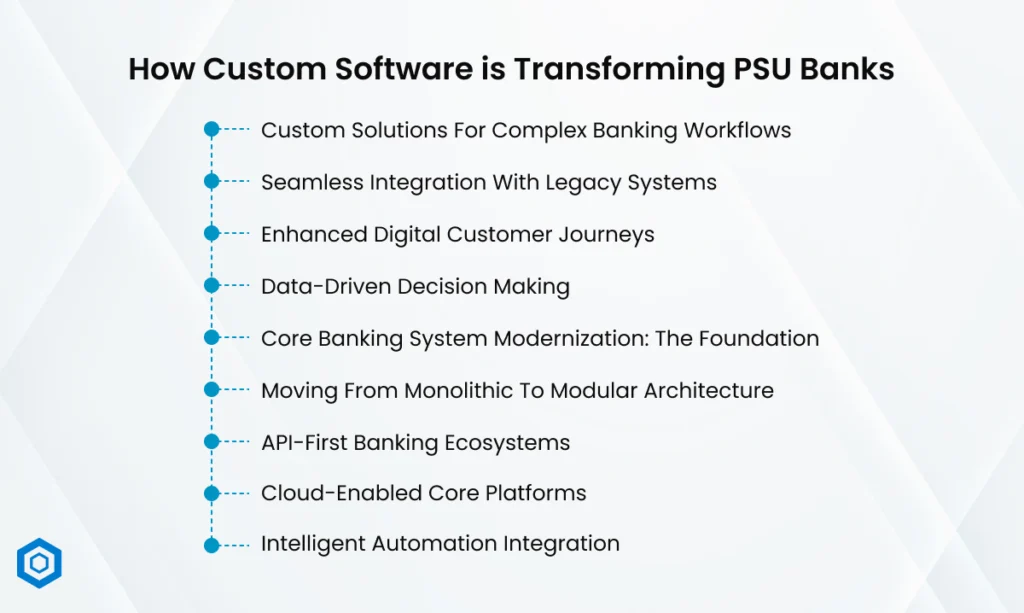
How Custom Software is Transforming PSU Banks
A digital platform designed just for PSU banks seems like the best way for them to keep their systems up to date without buying new ones. But ready-made systems don’t always work with rules, institutions, or growth targets. Machines that are built to order do.
1. Custom Solutions for Complex Banking Workflows
Each PSU bank has to follow its own set of rules and laws. Custom platforms let institutions create processes tailored to their needs. One big reason custom software is changing PSU banks is its flexibility. This is one of the most important issues in the history of banks.
2, Seamless Integration with Legacy Systems
To make core systems last longer while they slowly update the front end, PSU banks can make their own software and API levels. This step-by-step method makes it less likely that something will go wrong. It’s up to the bank to decide how other systems can work with custom software.
3. Enhanced Digital Customer Journeys
You can make your money work better for you when you use personalized banking apps. They speed up service and make it easier to start. If you make trips better for people, they will keep coming back, and new ones will join. This is a very important step toward closing the PSU bank technology gap with private banks.
4. Data-Driven Decision Making
Custom analytics tools can help PSU banks find useful insights in large datasets. This study’s results help businesses plan better, market more effectively, and manage risks more effectively. A lot of the info that PSU banks use these days is high-tech.
5. Core Banking System Modernization: The Foundation
If the core banking system isn’t fixed first, no other digital change project will work. The hardest and most important thing to do to close the technology gap is most of the time to update the core system.
6. Moving from Monolithic to Modular Architecture
Online banks today use many apps and a design that is easy to customize. This accelerates changes and allows items to adjust their sizes independently. The speed is much faster now that the design has changed. Bringing the core banking system up to date is one of the most important steps.
7. API-First Banking Ecosystems
Many different services and fintech partners need APIs enabled so PSU banks can work with them. You can generate more ideas when you use open-ended accounts. For public banks seeking to go digital, API-driven design is essential.
8. Cloud-Enabled Core Platforms
You can do more, better, and cheaper things when you move important jobs to the cloud. As banks plan to make their own software, the cloud is becoming a bigger part of their plans.
9. Intelligent Automation Integration
AI makes it easier for PSU banks to assist customers, detect scams, and ensure regulatory compliance. Automation makes it easy to do things by hand and also speeds up the process. As of now, the next generation of banking tools needs to have smart systems.
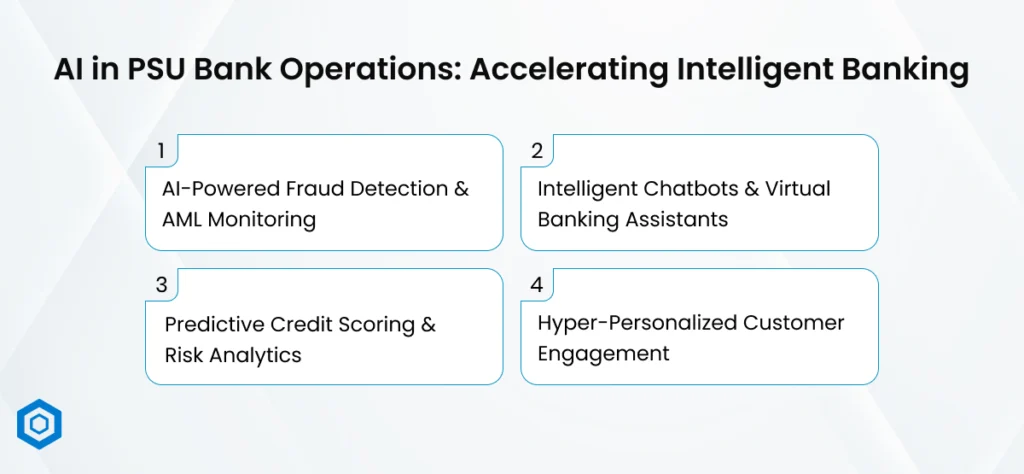
AI in PSU Bank Operations: Accelerating Intelligent Banking
AI is quickly becoming an important part of PSU banks as they go digital. It helps these government agencies automate routine tasks, manage risks more effectively, and provide a more tailored experience for each customer. Most of the first AI use was in private banks. Now, PSU banks are investing heavily in smart systems to catch up with private banks in technology.
When AI is built into the way PSU banks work, they can deal with huge amounts of real-time financial and behavioral data. With this change, banks can stop making decisions based on what happened and start providing services based on what will happen. One of the most important drivers of current custom software development for banks is AI-powered automation.
1. AI-Powered Fraud Detection & AML Monitoring
Modern AI systems constantly analyse transaction patterns to identify outliers and potential fraud in real time. For problem detection, machine learning models are much better than rule-based systems. This is because they adapt to new trends. As public sector banks seek more advanced ways to go digital, this feature is becoming increasingly important.
AI helps with anti-money laundering (AML) tracking by pointing out account behavior that doesn’t make sense. It also stops scams. Over time, people will be more likely to follow the rules, requiring less manual work.
2. Intelligent Chatbots & Virtual Banking Assistants
The way PSU banks help their customers is changing because of conversational AI tools. 24 hours a day, seven days a week, virtual helpers are ready to help you get started. Check whether you can get a loan and see how the deals are going. The software that banks use often includes robots to better meet customer needs.
They save money and make people happy by reducing wait times. The more it learns to understand real words, the more it can change and do what you want.
3. Predictive Credit Scoring & Risk Analytics
AI models can better decide who gets credit by looking at what people have done, bought, and other data in the past. Lenders can make better decisions, and they are less likely to fail. Soon, AI skills that help PSU banks predict what will happen will be among the most important they use.
If someone has a good credit score, they can still get credit even if they don’t have a perfect credit history. Many more people can now obtain loans.
4. Hyper-Personalized Customer Engagement
PSU banks can send preventative messages, offer useful financial goods, and make users’ experiences fit how they act because their personalization engines are powered by AI. Cross-selling is much more likely when people are involved. This is something PSU banks need to be able to do to catch up to private banks in technology.
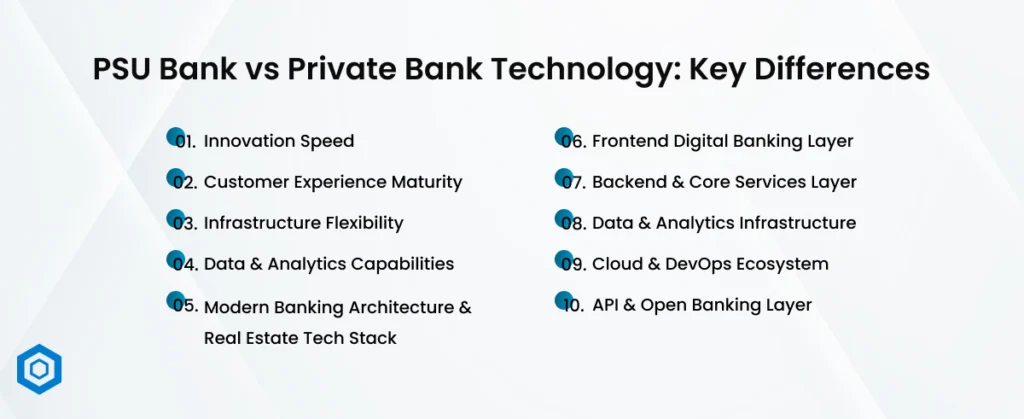
PSU Bank vs Private Bank Technology: Key Differences
When it comes to technology, knowing the difference between PSU banks and private banks helps institutions determine which updates are most needed. The difference is still pretty big, but it’s getting smaller.
1. Innovation Speed
They can add new features and services more quickly because the technology stacks they use are often more flexible. In the past, many PSU banks had longer growth cycles because they had to deal with old systems. One of the main goals of PSU banks’ digital transformation is to process cash withdrawals faster.
2. Customer Experience Maturity
They spent a lot of money to make it easy to use mobile apps, omnichannel payments, and real-time messages. Now, PSU banks are making up by developing custom software for specific bank projects. One of the major goals of modernization is still to improve the user experience.
3. Infrastructure Flexibility
Many private institutions use microservices and cloud-native designs, but many public-sector banks still use monolithic systems for some of their work. To bring core banking systems up to date and improve their performance, one important step is to switch to open platforms.
4. Data & Analytics Capabilities
A lot of the time, private banks use advanced analytics to build risk models and learn more about their customers. To close this gap, PSU banks are pouring more money into AI-driven data initiatives. For public sector banks to go digital, a key goal is to improve data intelligence.
5. Modern Banking Architecture & Real Estate Tech Stack
Public banks need to ensure they have the right technology to stay ahead of other banks in the same field. The right design ensures people are safe, creative, and have the opportunity to grow over time.
6. Frontend Digital Banking Layer
To make things easier for users, most banking apps today use React Native, Flutter, or the native iOS or Android interfaces. People will stick with you if your tools are quick and simple to use. Making good software for banks starts with making sure the front end works well.
7. Backend & Core Services Layer
Transactions, security, and business logic are handled by robust backends written in Node.js, Java, or Python. A machine that can expand can do lots of things at once. For PSU banks to go digital, this part is very important.
8. Data & Analytics Infrastructure
Bank systems today use PostgreSQL, MongoDB, or distributed data warehouses to manage large volumes of financial data. Advanced analytics systems enable real-time observations. A big part of using AI to run PSU banks well is designing data.
9. Cloud & DevOps Ecosystem
Modern banking chores need to be done flexibly. This is possible with cloud platforms such as AWS, Azure, and Google Cloud. With DevOps pipelines, code can be released continuously, enabling faster change iterations. Public sector banks can go digital in more and more ways that use cloud-native operations.
10. API & Open Banking Layer
An API gateway can link to banking networks, external services, and fintech partners. It’s easier to generate new ideas when you use open banking. For advanced upgrades to core banking systems, you need to build outward from the API.
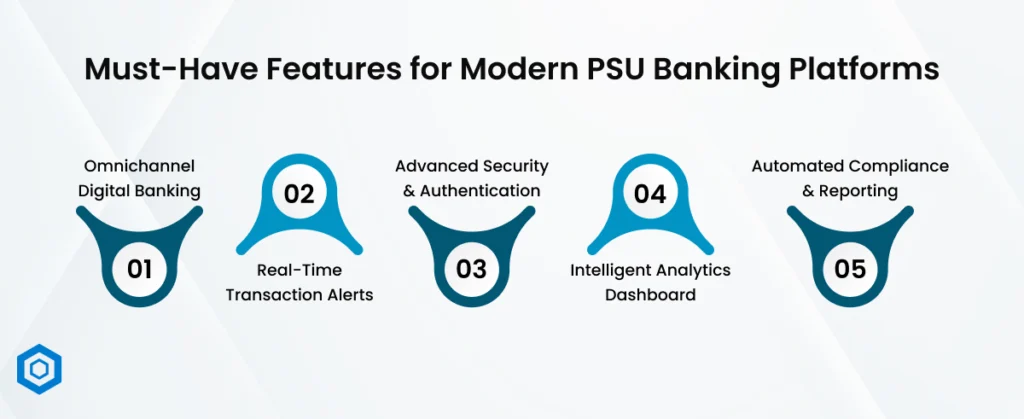
Must-Have Features for Modern PSU Banking Platforms
To successfully compete with private-sector banks, fintech companies, and other firms, they must set up a strong digital suite of features.
1. Omnichannel Digital Banking
Customers expect consistent experiences across mobile, web, and branch touchpoints. Unified banking platforms make it easier for people to use and interact with banks. PSU banks need to be able to use all routes for digital change to work.
2. Real-Time Transaction Alerts
Users trust you more when you let them know right away about payments, transfers, and account activity. People want to see things as they happen these days. With this tool, you can make more up-to-date software for banking work.
3. Advanced Security & Authentication
There are many ways to keep user accounts safe, such as using biometrics to sign up and tracking what users do. If you run a business today, you should always think about safety when making plans. In PSU banks, there are strict rules about how AI can be used.
4. Intelligent Analytics Dashboard
Data-driven dashboards show how people act, what risks there are, and how well the business is doing. With data, people can make better choices. This is what makes the options that public sector banks now have for going digital stand out.
5. Automated Compliance & Reporting
Banks have built-in tools that make it easy for them to follow the rules. Audits are less likely to happen, and people don’t have to do as much work. For key banking systems to stay up to date, they need to be compliant.
Why Choose Codeflash Infotech for PSU Bank Digital Transformation?
If PSU banks are undergoing a digital transformation, they need to ensure they choose the right banking software development company. Understanding broader Digital Transformation in Singapore: Trends, Challenges, and Future Opportunities can offer valuable strategic context — especially when navigating strict regulations and complex legacy environments.”
Codeflash Infotech can help public companies stay up to date on their software and ensure the job is done right, so it will work in the future.
When it comes to running PSU banks and teaching banks how to use AI, they are the best custom banking software development company. Banks can now generate new ideas faster and with less risk. It should take some time, but this should help PSU banks catch up to private banks in technology without affecting services important to the government.
Codeflash Infotech makes it safe and simple to adapt to user needs. Their service model is stable, and they offer many ways for businesses to work together. This makes them a good choice for businesses that want to help US public-sector banks develop long-term digital plans.
Conclusion
Things are changing quickly in the world of banking services. There is no longer a choice for PSU banks; they have to go digital. It’s always their goal to make things faster, more personalized, and more automatic at banks and fintech companies.
Public sector organizations need to keep their technology up to date to stay competitive. It has been a long time since PSU banks and private banks had the same level of technology. The best ways to close the gap are to invest in developing specialised software for banks and to keep important banking systems up to date.
PSU banks can use smart technologies like AI, cloud-native infrastructure, and API-driven tools to help customers and get things done faster. And someone who knows how hard it is to work with old ways of doing things and has extensive professional know-how needs to plan and implement change.
Codeflash Infotech can build tools that scale with the business and is well-versed in the financial world. It helps banks make sure that their system updates are safe and that their digital banking tools are ready for the future.
Frequently Asked Questions
To the old banking systems in PSU banks, add new capabilities such as cloud computing, AI automation, and advanced analytics. In this case, “digital transformation” means this. It will help with customer service, streamline operations, and enable real-time digital banking.
It’s easier for PSU banks to join, automate, and grow with digital tools designed just for them. You can see how custom software is changing PSU banks on these platforms. Banks can stay up to date over time with custom solutions that still follow the rules and keep operations stable.
Some of the best ways for public sector banks to go digital are through cloud-based core banking, intelligent analytics panels, bidirectional digital banking platforms, and core banking that is driven by APIs.
Updating the core banking system makes it easier to add new services, lowers costs, speeds up the release of new products, and enables real-time transfers. It’s what all of PSU banks’ successful digital change attempts are built on.
Table of Content
The Growing Technology Gap Between PSU and Private Banks
How Custom Software is Transforming PSU Banks
AI in PSU Bank Operations: Accelerating Intelligent Banking
PSU Bank vs Private Bank Technology: Key Differences
Must-Have Features for Modern PSU Banking Platforms
Why Choose Codeflash Infotech for PSU Bank Digital Transformation?