Fintech Solutions for PSU Banks_ Building a Digital-First Banking Future

Fintech Solutions for PSU Banks -Building a Digital-First Banking Future

20 MARCH

There is significant pressure on public sector units (PSUs) worldwide to adopt new technology and go digital. Banks’ old ways, the new rules, and real-time payments don’t always work well together. Many banks are interested in this change at PSU Bank because they want to stay in business.

More than 75% of bank business in the US is done online. It’s clear from these numbers that banks need to update their processes right away to keep their customers happy, grow, and continue operating smoothly.

Making old banking systems work with new ones without changing how things are done now is the hardest part for bank leaders and tech teams. Fintech Solutions for PSU Banks have made it possible to do big things in new ways. For example, AI can automate tasks, blockchain can enhance security, and banking systems can be built in the cloud. Find out about the newest Fintech Solutions for PSU Banks as well as the technologies that are bringing PSUs up to speed. Discover what financial institutions need to consider when they are making plans to go digital.

Why PSU Banks Must Embrace Digital Transformation

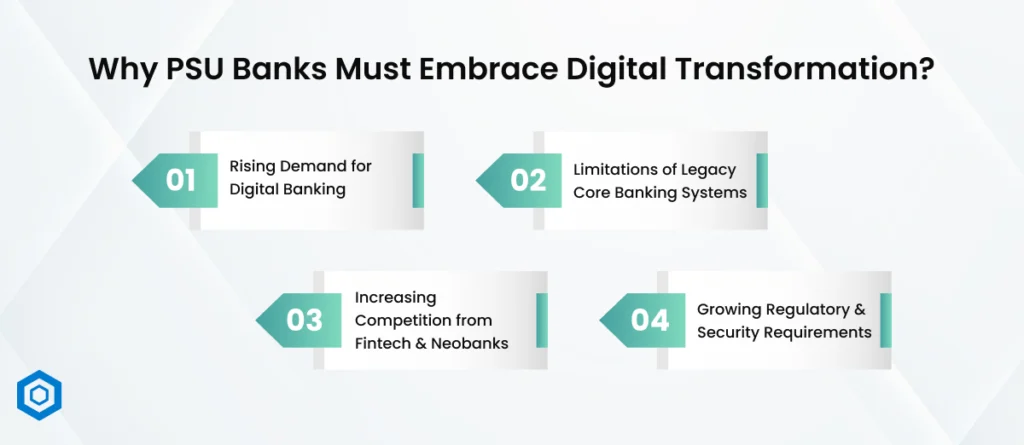
Why PSU Banks Must Embrace Digital Transformation?

Customers today expect simple, seamless banking experiences that work effortlessly on their smartphones. This shift means traditional banking models are rapidly evolving. If PSU banks fail to keep their technology up to date, they risk falling behind more agile competitors who can adopt and implement innovations faster. Embracing Digital Transformation in PSU Banks has become a key step for banks aiming to remain competitive and meet evolving customer expectations in today’s dynamic financial environment.

1. Rising Demand for Digital Banking

People expect to be able to quickly check their bank accounts, give and receive money, and use personalised banking services on their phones and the web. For some tasks, new tools work better than old ones. The need is one of the main reasons PSU banks are trying to go digital.

2. Limitations of Legacy Core Banking Systems

Many public sector banks still use systems that are decades old and hard to expand or keep up to date. Most of the time, these systems separate data into layers, handle it slowly, and make it hard to combine different types of data. It’s important to do this right if you want to change an old payment system.

3. Increasing Competition from Fintech & Neobanks

Fintech companies and digital-first banks (which make it easy for customers to sign up and offer better user experiences and smarter data) are quickly taking over the market. Government-run banks need to adopt new fintech tools to stay competitive.

4. Growing Regulatory & Security Requirements

These rules that banks have to follow to protect data and security are becoming harder to understand. Tools that use AI to help blockchain make payments have made it much easier to keep track of things these days. PSU banks need to keep their protection up to date to go digital.

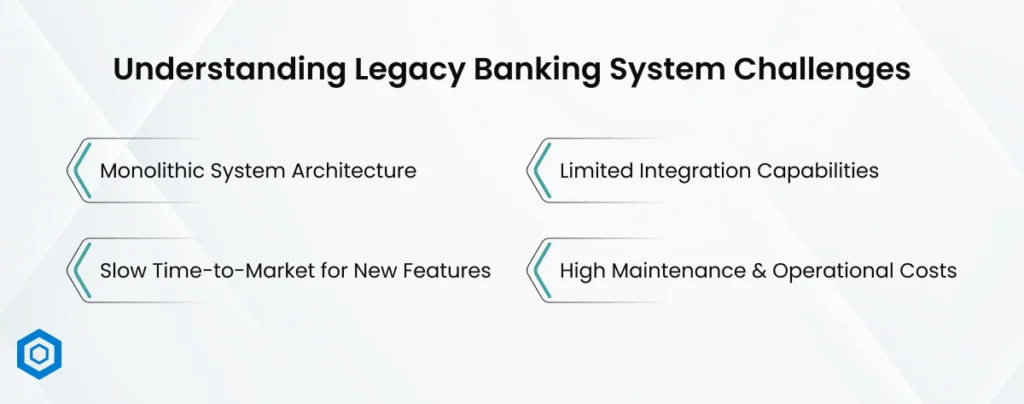
Understanding Legacy Banking System Challenges

Before making any changes, you should understand why the old ways of saving no longer work.

1. Monolithic System Architecture

Old banks were built with plans, which means they can’t always be changed or expanded. It takes a lot of time to test and review even small changes. These banks are very set in their ways, so it’s hard to improve them.

2. Limited Integration Capabilities

Our best web, banking, and API tools can’t work well with older systems. Coming up with new ideas this way costs more and takes longer. When public sector banks use fintech, the goal is to make it easier for systems to communicate with each other.

3. Slow Time-to-Market for New Features

It takes months, not weeks, to get new digital products out there on old hardware. They can’t compete as well with fast-moving financial companies while they have to wait. This company wants to speed things up and give PSU banks more tools.

4. High Maintenance & Operational Costs

Old systems need to be fixed daily using specialised tools. Most of the time, these costs rise faster than what is needed to fix something. Your business will save money by adopting new banking methods.

How to Modernise Legacy Banking Systems (Strategic Approach)

To make changes go smoothly and quickly, you need a well-thought-out, step-by-step plan for legacy banking system modernisation that keeps risks to a minimum and encourages new ideas.

Step 1: System Assessment & Gap Analysis

First, banks should look at how they work now, identify what’s slowing them down, and find ways to speed things up. A full audit can help you determine which growth projects are most important. It will be easy to move from PSU banks to digital banks after this step.

Step 2: Define a Cloud-First Roadmap

Many people can use the tools banks make in the cloud. This helps them solve problems better and come up with new ideas more quickly. Many public banks use multiple cloud services to stay safe and free. Moving to the cloud is often the basis for new digital options for banks.

Step 3: Adopt API-Driven Architecture

By enabling APIs, older systems can connect to newer apps, banking partners, and other services. Things can change this way slowly without replacing the whole system. Public-sector banks should adopt an API-first approach when evaluating fintech options.

Step 4: Implement Intelligent Automation

AI can be used to develop software that helps banks spot scams, attract new customers, and assess risk. When tasks are automatic, they run more smoothly and require less work from people. Smart systems will be the tools that banks use in the future.

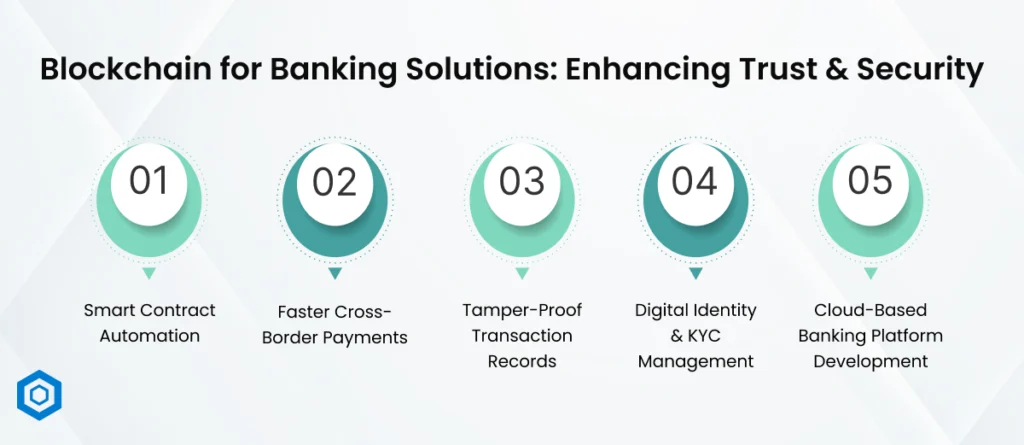
Blockchain for Banking Solutions: Enhancing Trust & Security

The use of blockchain can speed up plans to fix legacy banking systems. It will be easy to send money across countries, and banks will be able to verify that the information they have is correct. This tech is very useful in places where trust, duty, and adherence to rules are highly important.

1. Smart Contract Automation

Before certain conditions are met, smart contracts hold on to financial deals that have already been agreed upon, so people don’t have to do as much manual work and make fewer mistakes. Automating tasks using blockchain is becoming increasingly popular among banks as a business choice.

2. Faster Cross-Border Payments

When you pay for something abroad the old-fashioned way, there are usually a lot of agents and delays. It is possible to close deals faster and at lower cost using blockchain networks. Blockchain is a great use case for fintech solutions for public sector banks because it works so well.

3. Tamper-Proof Transaction Records

Blockchain keeps records of transactions that can’t be changed. This makes scams much less likely. These safe records help with checks and following the rules. New security measures are a big part of PSU Bank’s move to go digital.

4. Digital Identity & KYC Management

Blockchain-based identification systems can make it easier to verify customers. Shared KYC frameworks reduce unnecessary work and speed up the hiring process. This feature helps make updating old banking systems more efficient.

5. Cloud-Based Banking Platform Development

Cloud computing has become the backbone of scalable and resilient banking infrastructure. By developing cloud-based banking platforms, PSU banks can reduce their reliance on technology, make their systems more accessible, and accelerate digital innovation. When businesses want to update their old systems, moving to the cloud is often the first and most important step.

A well-planned cloud approach lets banks handle peak transaction volumes, implement changes more quickly, and connect with fintech partners with ease. Banks need to adapt to new fintech options in the highly competitive US financial market.

AI in Banking Software Development: Driving Intelligent PSU Banking

As PSU banks move toward greater digitisation, they are quickly adding AI to their plans. Public sector banks are using AI technologies to improve automation, speed up decision-making, and provide customers with a more personalised experience through advanced Software Development, as they update their old systems. If a bank wants to improve its old processes, it can’t just try AI; it has to use it.

1. AI-Powered Fraud Detection

AI runs systems that detect scams, monitor deal trends, and immediately report any suspicious behaviour. The scams that AI models have already encountered help them improve. And they need this extra layer of safety so that public sector banks can use safe fintech solutions in risky digital areas.

2. Intelligent Chatbots & Virtual Assistants

Robo-assisted PSU banks are open 24 hours a day, seven days a week, to help people. They don’t need to pay more. They can help you with questions about your money and keep you up to date on what’s happening as you get started. Smart tools are increasingly used to keep the PSU bank software modernisation company up-to-date.

3. Predictive Risk & Credit Scoring

AI can look at how someone manages their money to get a better idea of how credit risky they are. There is less chance that banks will fail, so they are more likely to lend money quickly. One great thing about banks’ new business choices is that they can use AI to predict the future.

4. Personalised Banking Experiences

AI helps banks offer personalised product suggestions, tips on how to save money, and information on how much people spend. People will be happier and more likely to stick with your business if you get to know them better. As PSU banks’ digital change projects move forward, this skill is becoming increasingly important.

Must-Have Features for Modern PSU Banking Platforms

Fintech Solutions for PSU Banks need to build a strong set of features to stay competitive in today’s digital world.

1. Omnichannel Digital Banking

People want stores, the web, and their phones to deliver the same experience. People can more easily access and manage their accounts with unified banking systems. These days, PSU banks need to be able to use all platforms to go digital.

2. Real-Time Transaction Monitoring

It’s easier to understand and build trust with customers when you track actions and provide instant transaction reports. People who use current banking apps want to know what’s going on right now. In general, this makes internet banking options better.

3. Automated Compliance & Reporting

Banks can better follow the law when they can easily track their compliance. Auto-generated records cut down on the amount of work that needs to be done by hand and the chance of being audited. To bring old banking systems up to date, compliance technology is a must.

4. Advanced Security & Authentication

Biometric login, multi-factor authentication, and behavioural tracking all work together to keep user accounts safe. Modern banking systems require strong security frameworks. Security-first design is at the heart of PSU Bank’s plans to update its software.

5. Advanced Analytics Dashboard

Customers’ habits, transaction trends, and risk levels can all be seen on data-driven screens. Analytics help companies pick the best options. New financial choices for public sector banks are different because of this feature.

Why Choose Codeflash Infotech for PSU Bank Digital Transformation?

When a PSU bank goes digital, it’s crucial to choose the right technology partner, especially for banks operating in complex legacy environments. To successfully modernise, you need to know a lot about the subject, make sure the system is scalable, and make sure it strictly follows legal rules. 

Codflash Infotech helps banks with safe, quick fintech options that integrate with today’s financial systems. They do it in a smart way that will work in the future.

Codeflash Infotech is an experienced company that helps public-sector banks transition from complex systems to flexible, cloud-based platforms. To build strong, flexible banking systems, their team has experience integrating AI into banking software, using blockchain for banking solutions, and building cloud-based banking platforms.

Conclusion

The banking business is undergoing a major digital transformation. In today’s fast-changing financial world, institutions that prioritise the digital transformation of PSU banks will be better positioned to succeed. Legacy technology once worked well, but it can’t handle real-time transfers, mobile banking, or data-driven decision-making. Banks must now adopt modern Fintech Solutions for PSU Banks to improve business efficiency, customer experience, and regulatory compliance. Smart technologies like AI can help PSU banks be more flexible and open to new ideas. This can be done with blockchain for banking solutions, AI for making banking software, and building a banking platform in the cloud with the right Fintech Solutions for PSU Banks.

Frequently Asked Questions

Integrating new digital technologies such as AI, cloud computing, and automation into existing banking systems. This is known as “PSU bank digital transformation.” The goal is to make things run more easily, give customers a better experience, and let banking services work in real time.
Before banks update their legacy systems, they should review them carefully. After that, they should move to cloud platforms, adopt API-driven design, and add AI-driven automation.

Some of the best fintech options for public sector banks are bidirectional digital banking systems, blockchain-based transaction security, AI-powered scam detection, and cloud-native core banking.

When AI is used to develop banking software, it can detect scams in real time, predict credit scores, adapt the banking experience, and automate tasks intelligently. These features make operations much more efficient and customers happier.